


It's Not the Ferment, It's the Food: Why the Cabbage (and the Tea) Matter More Than You Think
Scobucha Fermented FoodsFermentation gets plenty of attention in conversations about gut health. But a recent study suggests there’s another important part of the story: what’s being fermented in the first place.
That’s good news for anyone who loves real food. It’s a reminder that fermentation is not a magic switch. The cabbage, tea, and other ingredients matter, too, and so does the care behind the process.
WHAT DID THE NEW STUDY FIND?
Published in npj Science of Food in 2026, the study compared fermented foods and drinks (including kimchi, sauerkraut, water kefir, and kombucha) with unfermented controls made from the same base ingredients. In other words, researchers aimed to distinguish the effects of the food matrix from the effects of fermentation itself.
In mice, the food matrix was the main influence on gut microbiota composition and microbial metabolite production. Kimchi stood out: compared with unfermented cabbage, it was associated with differences in gut microbiota structure and acetate production. The fermented beverages, including kombucha, did not differ significantly from their unfermented controls in this study.[^1]
That is an interesting finding, not a reason to dismiss fermentation. The researchers studied mice, not people, and the results don’t show that eating kimchi will create a specific change in a person’s gut microbiome. They do offer a useful reminder: the base food and the fermentation process can work together, and their effects may vary from one food to another.
WHAT DOES “FOOD MATRIX” MEAN?
The food matrix is the whole food and the way its components fit together: its structure, nutrients, fiber, water, and other naturally occurring compounds. In kimchi, that means more than a culture of microbes. It means cabbage, seasonings, and the transformations that happen as the mixture ferments.
This helps explain why traditional fermented foods are not interchangeable. Fermented cabbage, tea, and milk each begin with different ingredients. Their textures, nutrients, and fermentation communities differ, too. A study that compares a fermented food with a different unfermented food can’t easily tell which differences come from the ingredients and which come from fermentation. Matching each fermented food to its own unfermented base helps ask a clearer question.
The answer, according to this mouse study, is not “fermentation doesn’t matter.” It is that the ingredients matter, and fermentation’s contribution may depend on the food being fermented.
WHY DOES CABBAGE MATTER IN KIMCHI?
Cabbage is more than a crunchy carrier for seasoning. It gives kimchi its familiar texture and contributes the whole-food foundation that fermentation transforms. Other ingredients, from garlic and ginger to pepper and radish, add their own character to the finished food.
Prior research has also explored how raw ingredients help shape the microbial community that develops during kimchi fermentation.[^2] That makes intuitive sense: traditional fermentation is a relationship between ingredients, microbes, time, and conditions. Change the starting ingredients, and you may change the result.
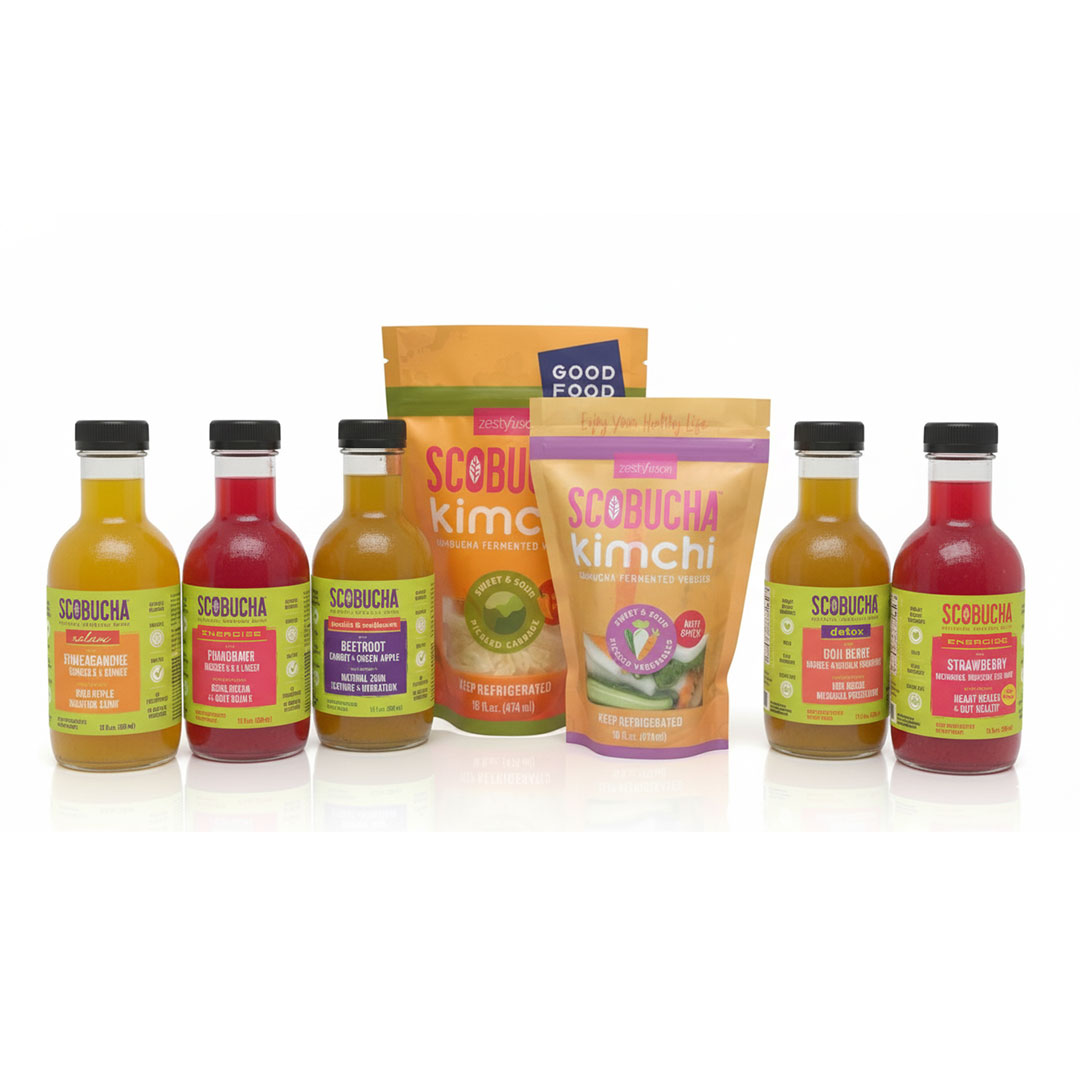
At Scobucha, we make kimchi with real organic vegetables and raw kombucha. Our varieties include Napa cabbage, pickled cabbage, daikon radish, and beets. We value the ingredients as much as the fermentation: their fresh flavor and texture are part of what makes each batch distinctive.

DOES THIS MEAN PROBIOTICS DON’T MATTER?
Not at all. Fermentation can bring lively flavor and texture, and fermented foods can contain microorganisms and compounds created during the process. But “fermented,” “contains live cultures,” and “probiotic” are not automatically interchangeable claims. A probiotic, in the scientific sense, is a live microorganism shown to provide a health benefit when consumed in adequate amounts.
That distinction matters if we want to talk about gut health honestly. Probiotic-rich foods can be part of a varied way of eating, but a food’s benefits shouldn’t be reduced to a single label or promised as a guaranteed result. The 2026 study doesn’t establish a particular benefit for Scobucha products, or for any kimchi, in people. It does strengthen a sensible food-first approach: look at the complete ingredient, the way it’s made, and the evidence behind any health claim.
AND WHAT ABOUT THE TEA IN KOMBUCHA?
Kombucha begins with tea and is transformed through fermentation. In the recent study, kombucha did not produce a significantly different microbiota or metabolite response from its unfermented control in the mouse model. That is a specific result in a specific experiment, not proof that kombucha has no value, or that every person will respond the same way.
For us, the tea matters because it is the starting point for a bright, tangy drink we craft with care. Scobucha makes raw kombucha in a variety of flavors; selections can change seasonally, so check our kombucha page for more about the drink and current options.
HOW TO CHOOSE FERMENTED FOODS WITH CARE
If you’re exploring fermented vegetables benefits, or adding more traditional fermented foods to your meals, start with what you enjoy and what fits your routine.
- Read the ingredients. A clean label makes it easier to understand what’s in the jar or bottle.
- Look for real food first. Vegetables, tea, and thoughtfully chosen seasonings are the foundation, not an afterthought.
- Choose a flavor you’ll use. Try kimchi with grains, eggs, noodles, sandwiches, or a simple bowl of vegetables.
- Experiment with timing and portions. There is no single serving or schedule that suits everyone. Notice what works for you.
- Keep food safety and storage in mind. Follow the product’s directions, including refrigeration where indicated.
You can explore Scobucha’s kimchi varieties or read more about what kimchi is.
A FOOD-FIRST WAY TO THINK ABOUT FERMENTATION
The newest research offers a thoughtful nudge: don’t give fermentation all the credit, or overlook it entirely. A food’s starting ingredients matter. The microbes and changes that fermentation brings matter. And the relationship between the two deserves more study, especially in people.
That’s why we take pride in making food with real ingredients, a clean-label approach, and intentional fermentation. Scobucha kimchi brings together organic vegetables and raw kombucha in a bright, tangy, versatile food. Enjoy it because it tastes good, fits your table, and reflects the care of traditional fermentation, not because anyone can promise it will deliver the same gut response for everyone.
[^1]: Balasubramanian, R. et al. “Fermented food matrix influences gut microbiota responses in mice.” npj Science of Food (2026).
[^2]: “Microbial niches in raw ingredients determine microbial community assembly during kimchi fermentation.” PubMed.